Tuesday, 30 April 2013

'...99% practicing ALL aspects of Yoga, including theory'. Sharath Jois

Sun coming up during practice this week. Note my Sweeney bottom right as I brush up on my 2nd.

This fb status update  just in from a mini Sharath conference at Jois Yoga Encinitas

Jois Yoga Encinitas shared Jois Yoga's status.
"Whenever I spend time in the presence of the Jois family there is always a new insight into some aspect of the practice or teachings. Recently Sharath was discussing the meaning behind the quote '99% Theory, 1% Practice'. Guruji did not mean that we should only take 1% Theory.... Far from it, The real meaning behind the quote is that we should spend 99% of the time practicing yoga, which includes theory...we should only spend 1% of the time talking about yoga....99% practicing all aspects of Yoga, including theory...."

This reminded me of an earlier post of mine, Yoga is not an Anti thought practice, the meat of it is reproduced below

"Yoga is 95% practice, 5% theory" Interview Sri K. Pattabhi Jois

This has always struck me as the most misunderstood of statements. It seems to get used as a justification for not thinking about the practice too much, too deeply, not studying or reading anything too heavy, too serious, too.... philosophical, that it's like zen, 'don't think just sit'.

Personally I've tended to assume Pattabhi Jois intended, by such a statement above, something along the lines of this...

"Despite its teaching of “no dependence upon words and letters,” Chan did not reject the scriptures of the Buddhist canon, but simply warned of the futility of relying on them for the attainment of emancipating insight" Zen. Wikipedia (see below).

Here's Richard...


*1-2. yogas-citta-vritti-nirodhah  (Tacit question "What is Yoga")

yogah - the topic
citta - mind;brain
vrtti - activity
nirodhah - stoppage

Yoga is the complete stoppage of the mind/brain activist

'Patanjali describes two categories for these loopings of the citta. Those that torment are called klista. Others are called aklista; they are neutral and do not cause torment and suffering. This is an extremely important point made right at the beginning of the Yoga Sutras. Many citta vrittis are important and needed as props for meditation and as the content of intelligent thought. The tormenting vrttis often cease thanks to the background work of those that are non tormenting. By the same token the non tormenting vrittis are absolutely necessary as well, and they too drop their structures and forms in deeper states of meditation. Yoga actually improves the thinking process rather than creating a catatonic state. It is important to remember that even though deeper practices of yoga lead to states of mind in which thought comes to a point of cessation, yoga is not an antithought practice. Instead it is a refinement of the art of thinking, allowing chains of thought to unfold within an open sky of compassion and intelligence. Rather than just giving up with an attitude of , "well, thought has gotten us into all of this trouble so now we are not going to think at all," yoga encourages clear, penetrating thinking. It is astonishing how frequently and easily this has been misinterpreted over the centuries by those unwilling to enjoy the paradoxes of thought that are revealed and observed within a healthy yoga practice'.
p151 The Mirror of Yoga; Richard Freeman.
--------------------------------------------------------- 

'... yoga can also be derived from the root yuja and mean samadhi or samadhana, "to put in place perfectly".... Thus yoga by this definition, would mean putting all mental energies in place, or harnessing mental energies without any dissipation. This definition is different from the earlier derivation of the word yoga from the root yujir, meaning "unity" (yujir yoga).
Based on this interpretation the yoga of Patanjali is a system of practices that lead to the total harnessing of mental energy without any dissipation whatsoever (nirodha "completely contained") One can note that it is not unity with a higher principle that is aimed for in this form of yoga, but rather the removal of all the distractions of the mind.... One system talks of unity the other of freedom"
Yoga for the Three stages of Life. 
Chapter III, What is yoga. p34-35 
Srivatsa Ramaswami

*Yoga Sutras quote and treatment from 
Patanjali's Yoga Sutras based on the teaching of Srivatsa Ramaswami by Pamala Hoxsey


---------------------------------------------------------------------

Of course reading the yoga shastras/scriptures (or Richard's book for example), studying, reflecting on, discussing and mulling over theory, seeking to explore, ground, and understand our practice is not the same as 'chattering about yoga', and we do chatter a tad in the blogosphere. I notice though, that most of the hits on this blog come from people visiting in their respective mornings. Keep an eye on the feedjit gadget on the bottom right of mine and others blogs and you can watch the world wake up and fortify, occasionally inspire themselves, for their coming practice. The 'talking/reading about yoga', helps us get on the mat and reflect on other aspects of practice throughout our day. Ideally of course we would just have a copy of the Upanishads or the Gita in our pockets and turn to that for a few pages of inspiration, but room for a little of both perhaps.

I tend to read yoga blogs rather than World News in the morning, while drinking my pre practice Nespresso

And of course we love our asana ( and Pattabhi Jois' Ashtanga is, for good or for ill, a highly asana focused practice) and picking them apart, searching for the elusive key that will help us bind in Mari D or catch our ankles in kapo or raise the duck in karandavasana is a little addictive. There is no secret key of course just practice but those little tips we come across that give us new hope and inspiration to keep trying, serve the purpose perhaps of getting us back on the mat each day for where that practice takes place.

I take it back, there are a few keys, a few secrets, that make a little difference but mostly they just make it safer or more comfortable... more elegant. You can haul yourself through the practice just by turning up each morning and eventually some degree of grace will shoulder it's way into our practice despite our clumsy, clunkiness...the body and the breath, it seems, tend to work it out pretty well between them.

Anyway in honour of Sharath's clarification that 99% practice includes theory here's the bibliography from Krishnamacharya's Yoga Makaranda much of which can be found in pdf form through a simple google search ( here's a good place to start http://archive.org/details/TheYogaUpanishads ). Krishnamacharya's Yoga Makaranda can be found in free download over on the right of my blog on the free downloads page along with some other good reads.

Read some of them perhaps, try to understand them as best we can, question them, see if they fit with our own experience and if so, try to work them into our day long yoga practice.


Bibliography
1. Rajayoga Ratnakaram
2. Hathayoga Pradipika
3. Yoga Saravalli
4. Yoga Balaprathipikai
5. Ravana Nadi (Nadi Pariksa of Ravana) 6. Bhairava Kalpam

7. Sri Tattvanidhi
8. Yoga Ratnakarandam 9. Mano Narayaneeyam

10. Rudrayameelam (Rudrayamalam) 
11. Brahmayameelam
12. Atharvana Rahasyam
13. Patanjala Yogadarshanam 
14. Kapilasutram
15. Yogayajnavalkyam
16. Gheranda Samhita

17. Narada Pancharatra Samhita 
18. Satvata Samhita
19. Siva Samhita
20. Dhyana Bindu Upanishad 

21. Chandilya Upanishad
22. Yoga Shika Upanishad
23. Yoga Kundalya Upanishad 

24. Ahir Buddhniya Samhita 
25. Nada Bindu Upanishad 
26. Amrita Bindu Upanishad 
27. Garbha Upanishad 


UPDATE

Just checked feedjit was working and noticed that I've clicked over 600,000 visits to the blog

That's just mad. Thank you to M. for the 500,000+ visits and to everyone else who's stopped by and especially to this visitor from Belgrade who I've counted back on the feedjit gadget and figure was number 600,000
UPDATE 2
The ruddy counter above has stopped working since I took this screenshot, shy obviously. I just added blogger's own counter and it puts the page visits at over 1,000, 000, go figure.  
----------------------------------------------

Saturday, 27 April 2013

Chanting or playing the flute in Asana

Photo update: (thought after moving to Japan I needed an updated version of the transverse  flute photos below). This picture seemed to make perfect sense at the time. How can you tell if a posture is...proficient (Krishnamacharya's word)? The answer being of course, how well can you breath, can you make the breath long, thin, slow, like the pouring of oil (Krishnamacharya again) could you, hypothetically obviously, play a long tone on a flute, a shakuhachi say.... or chant without running out of breath.

This week we were offered the chance to have free lessons through the school 'attached' to the shop (thank you Laura... and Vicky). Sax is/was my thing so I chose flute lessons, I've fooled around with flutes for years, can test the ones I've repaired but never taken actual lessons. Come to think of it I never had Sax lessons either, Saxophone...at home. Actually it was more like Sax by the river, under a bridge by the Kamo gawa in Kyoto each morning, whatever the weather, whatever the season...... sounds familiar.
Kamo gawa, Demachiyanagi, Kyoto. Taken from the bridge I used to practice under
See that big clump of trees in the middle, contains one of the oldest shrines in Kyoto....
Shimogamo jinja, M. and I were married here : )

So flute homework and a dilemma...

Do I practice my flute before or after the Yoga?

For the last six years or so I've practiced twice a day, soon as I get up, soon as I get home. Currently it's Ashtanga in the morning, Vinyasa Krama and my main pranayama session in the evening.

When I get off the bike I'm nicely warmed up for a short, pre pranayama, asana practice, warm enough to jump into pretty much any short Vinyasa krama subroutine I may feel I've been neglecting. But if I practice the yoga first it's a little late for the flute ( neighbours). Practice the flute first and the body has cooled down and I need a longer asana practice which cuts into pranayama and meditation time. Dilemma.

I know I'm spoiled, makes me wonder which I'd choose if I ended up only able to practice once a day.

Solution?


See too perhaps, this post


OK, I was joking, at least I thought I was.

At first I thought this was being disrespectful to both the flute and the asana but then it struck me, what could be better practice for both than practicing playing long tones in eka pada sirsasana.

The breath should be long, thin, slow, like the pouring of oil according to Krishnamacharya.

That's one thing in janu sirsasana but eka pada sirsasana? Good way to check the steadiness of the breath.
Lord krishna

Krishnamacharya would have the Mysore boys chant mantras out loud while they were in asana, this evening, just as an experiment, I practiced a few scales and short pieces in in a handful of asana that seemed doable while holding a flute.
Krishnamacharya would have the boys of the Mysore palace chant mantras while in asana
Breath of Gods

Vrikasana
Virabhadrasana
Dandasana
Marichiyasana A
Navasana (hard)
Badha konasana ( feet made a nice prop for the book)
Eka pada sirsasana ( tried Dwi but failed)
Yoga nidrasana (favourite)
Vatyanasana (just plain silly)
Gomukhasana (nice)
Sarvangasana (teacher wouldn't approve of the jalandhara or angle of flute)
sirsasana ( didn't really work)
Padmasana


You might not want to pick up a flute but how about a simple whistle


Pick an asana of your choice, start with something simple, try to keep a steady, even note.

....or just whistle


 I also recommend exploring some chanting, out loud while in some tricky asana and see how steady you can keep your breath throughout, try the opening chant say in Marichiyasana D or Kuukutasana, Kapo or Eka Pada Sirsasana.


Niralumba sarvangasana with flute
...and just one more because I just couldn't resist and last time I tried to shoot it I'll i got was my backside and the foot joint.


Update:

Just seen the leg behind head flute picture used on a flyer for a workshop I'm presenting soon in Moscow, i though that now Ive moved to japan an update was called for.


Friday, 26 April 2013

The differences and distinctions that emerged in Ashtanga : More on/from Petri Räisänen's Ashtanga Yoga Primary series manual

Continuing with yesterdays review post of Petri Räisänen's book

Back Cover

We find this on the Colophon page below the copyright details

"Based on Sri K Pattabhi Jois' Interviews (R.Sharath Jois translator;
recorded by Petri Räisänen) in Mysore 2003-2004. Edited in 2013."

In the Introduction Petri lists his teachers

1989  Tove palmgren
1989  Derek Ireland, Radha Warrell
1994  Lino Miele
1997  Sri K. Pattabhi Jois
2000  Richard freeman
2000  Eddie Stern

Also in the Introduction Petri discusses differences that emerged, over the years, within the Ashtanga Vinyasa method as well as distinctions between Western and Indian styles of asana practice.

Differences that emerged within the Ashtanga Vinyasa method
In the section below Petri discusses these....differences. I have broken the paragraph up into a numbered list to allow anyone to comment more easily should they so wish. I haven't, however, changed the wording or order in any way.

"The asana technique described in this book may differ from how students learned in Mysore in the 60's or how it was practiced in the 80's, as Astanga yoga has significantly grown and shifted since pattabhi jois's first journey to North America in 1975. At that time for example....

(1) asanas were given out much more quickly;

(2) Some students learned three series in just three months. Today it would take about three years for a highly flexible and stable-minded student to accomplish the same.

(3) Some asanas were practiced in a different order than they are today,

(4) and pranayama (breathing) practice was introduced after a few months of practice.

(5) Some readers will recognise other changes, such as janu-sirsasana A, which used to be practiced with the head on the knee whereas now practitioners bend forwards into a chin-to-shin position;

(6) or in prasarita -padotanasana C, where the palms are often turned outwards instead of inwards.

(7) A further example can be found in Utthita-hasta-padangusthasana, when the leg was lifted up only to a horizontal level and the head placed onto the knee.

(8) The drishti (gazing points) have changed in many asanas from the nose-tip to the big toe or from between the eyebrows to the nose-tip". p12-13


Distinctions between Western and indian styles of asana practice.

"Over time a distinction has also developed between Western and Indian stylses of asana practice.

(a) Western styles often focusses excessively on the "exact" outer alignment and incorporates an overly intense form of breathing, whereas in the Indian style one focusses more on conserving the energy and breath.

(b) The practice has also been affected by varying trends developed primarily by Western yogis.

(c) At one point students practiced handstands as foundational asanas

(d) or would do Hanumanasana and Sama-konasana (frount and side splits) after Prasarita-paddonasana D.

(e) Up until the end of the 80's, some people would practice both morning and evening".


This section on differences and distinctions ends with this statement regarding the end of research.

"Towards the end of the 90's Pattabhi Jois and Sharath Jois started to clear away extra vinyasas and superfluous positions from the vinyasa system. In 2006, Guruji announced that his research had been completed and that the practice was ready to be taught in it's essential form". p15

And yet the research is never completed, we continue it every time we step on the mat, take mrigi mudra for pranayama, or settle into our preferred  posture for meditation.

mrigi mudra


The differences and distinctions that emerged in Ashtanga : More on/from Petri Räisänen's Ashtanga Yoga Primary series manual.
This, my favourite paragraph thus far in Petri's book.

"As a former Finnish folk-healer, I have been particularly interested in the parts of Ashtanga yoga which operate on the level of the body's energy flow, and I was able to receive advice from pattabhi Jois and Sharath on these topics. The information appears in short chapters (prana, nadir, vayu and cakras p41-42) in this book. According to pattabhi Jois and Sharath, comprehension of the latter limbs of Ashtanga is only necessary for a devoted practitioner, and so to speak of these parts in a book about Primary series is not essential. I have included them in this text as a way to further entice the new practitioner into the quieter and more subtle realms of the practice. This section is also of interest for those students who are already quite established in their practice and ready to explore other aspects of the yogic journey" p15

Petri is writing to us here, all of us, to anyone who practices Primary series. Whether they are beginners first stepping on to the mat with a little confusion quickly followed by awe and wonder and perhaps a little fear, or advanced practitioners practicing their Friday Primary, or perhaps an Intermediate practitioner on their first trip to Mysore practicing Primary for that first month. But also to those who have perhaps no aspirations to practice any other series than Primary ( Michael Gannon said that Pattabhi Jois told him Primary was for life, Intermediate for those who wish to teach and Advanced series for demonstration).

And for me too who having ventured into advanced series with a little asana madness of my own ended up exploring a slower breath, a slower practice, so slow in fact that I barely have time to complete a whole series....

and that's just fine.

"...entice the ...practitioner into the quieter and more subtle realms of the practice".

Petri says as much.

Thank you Petri for a terrific book.

Wednesday, 24 April 2013

UPDATED. BOOK REVIEW: Petri Räisänen's 'Definitive Primary Series Practice Manual'

I should point out right from the outset that this was a review copy, I didn't buy this book.


Does not buying it make a difference, probably. These days, buying online, we're a little in the dark as to what we're going to get. Amazon helps with it's preview but it's not like going into a bookshop picking a book up and flicking through before we buy. I've had books arrive that have been a real disappointment and others that have been a delight.

With a free copy in your area of interest your hardly going to be disappointed, however it turns out.

That said I would happily have paid full price for this book, it's a beautifully produced, glossy, hardback and a great deal of thought has gone into the design. The publishers are Yogawords and these are the people behind Donna Holleman's excellent Dancing the flame of Life and the John Scott DVD. So thank you to Zoe for sending me a copy.


Two other things we should perhaps consider at the outset (both of which I was asked when I first mentioned the book on fb)...

1. Do we NEED another Ashtanga manual?

2. Definitive primary series manual?

So we have David's and Lino's and John Scott's, Gregor's Primary AND Intermediate. Kino is bring a manual out in July, Sharath has just released his and we're still waiting for Lino to have his Primary to Advanced B book translated into English. 

Who have I left out? Thank you for the reminder, I'd forgotten Manju's training manual of course and Matthew Sweeney's unique Ashtanga as it is, both of which I have.

To be fair, Petri's book was first published in Swedish in 2005, Gregor Maehle's Primary book came out the following year and there had been quite a gap between these and David Swenson's and John Scott's books. As we know, the practice had changed slightly over the years, an up to date version was perhaps due.

This brings us to Question two and to why Petri (or the publishers) refer to it as definitive. It's also perhaps the main reason you might want to buy it and also, interestingly, why you might not.

NOTE:  Just been pointed out that definitive is not on the cover of the Swedish or Finnish versions.

"To verify that the information in the book is correct, follows the Indian tradition in it's entirety, and is in accordance with Pattabhi Jois and his grandson Sharath Jois (formally known as Sharath Rangaswamy), I was fortunate enough to meet with them both every afternoon for two months in 2003 and 2004 at the office of the Ashtanga Yoga Institute in Mysore. I asked an endless number of questions and wrote fervently as they gave their time generously. I would present the more detailed questions to Sharath, who would then translate them into kannada to for pattabhi Jois, whom I sat beside. pattabhi Jois would think for a moment, and then reply citing whole passages in Sanskrit and Kannada to Sharath, who then translated them back into English. We went through the vinyasa technique and alignment for each posture extremely carefully; so carefully indeed, that pattabhi jois and Sharath laughed at my pedantic "Western" nature".

That's the first reason why it might be considered definitive, the second is this, which explains perhaps why 'research' is no longer in the title of the Ashtanga institute in Mysore ( the Institute used to be called AYRI - Ashtanga yoga research institute,it's now KPJAYI - the K. Patabhi Jois Ashtanga Yoga Institute)

"In 2006, Guruji announced that his research had been completed and that the practice was ready to be taught in it's essential form".

I didn't know that.

NB: Typing out those quotes made me think that although I do like the design, the print is a little small for a manual.

So Petri's book has been verified in detail and done so just before the system became fixed in stone, definitive? OK, fair enough.

So perhaps another reason for why we might need another Ashtanga manual, it's supposedly authoritative and up to date.


However, I also suggested that might be a reason for NOT buying the book. Sometimes you can follow the current party line too closely ( I think Petri does follow/present current practice but he also mentions a lot of qualifications which is interesting, this is quite a subtle book in many ways). 

UPDATE: I would argue though that there are several lines of 'lineage' and I'm not sure that Sharath or even Pattabhi Jois' 2006 Ashtanga necessarily best represents the Ashtanga of Krishnamacharya as found in Yoga Makaranda. However, Sharath does of course continue to provide a form of the practice that everyone can learn and give them something to walk into any Shala around the world with, as well as Mysore itself and that strikes me as important. It's a very, clean stripped down, form of the practice. I have a great deal of respect for Sharath, for anyone who has practiced for twenty years plus, despite my challenging/questioning titles like Head of the lineage (which I doubt Sharath has ever used personally). My question of the 'party line' in this post is to suggest that there are many Ashtanga's, Krishnamacharya's 'original' Ashtanga (which I'm exploring here), the home Ashtanga tradition, Manju's, which is quite different. Hawaii Ashtanga, West coast, Boulder, European ( Southern, Central, Eastern and Northern), Australian,  the British tradition....the Russian, all seem to have their own characteristics. Perhaps there's a slightly (or greatly) different Ashtanga for everyone who practices and maybe that's as it should be, surely Yoga Is the most personal, individual, of practices, not in the sense of Self expression but rather in mind to discover mind, self to discover, and ultimately overcome, the self. See follow up post.

Is it possible to produce a book though that reflects that?

OK pictures we need pictures. 

What's in it, what are we getting?

Contents


The problem with an Ashtanga Primary manual is that there is a lot of series to cover, not leaving much space for anything else. Petri does well and manages to cover a wide area, each section, whether on Ashtanga History or Prana and chakras, Mantra and Drishti, is short enough not to overwhelm the beginner and yet there's some depth there too for anyone who has been practicing for a while. 

This is an overview of the book but there are a lot of little details I'm going to want to pick up on over the next couple of weeks. As it happens this book has come out at just the right time as I've just returned to a relatively straight Ashtanga practice in the mornings (although with some Krishnamacharya Yoga Makaranda and Ramaswami Vinyasa Krama baggage - both Krishnamacharya and Ramaswami are of course mentioned in the books bibliography).

 LAYOUT

There is a lot going on in this book!

Lets take a page, here's the section on Kukkutasana.

M's first thought was that the book was more about Petri than about Ashtanga. There are full page pictures of Petri in the asana on every spread, a smaller picture would have allowed for a larger print. And yetKkrishnamacharya did the same thing, Pattabhi Jois too in Yoga Mala. Krishnamacharya says in Yoga makaranda to look carefully at the pictures.


An interesting aside to Kukutasana above ( and a bit of a taster of the descriptions), the sort of thing I hope to pick up on some future posts on the book, is this....

"Note : According to yoga mala, one does naulie here, one technique of the purification actions known as kriyas, which is done by creating a wave-like motion in the stomach. This should be learned directly from a guru or an experienced teacher. Performing nauli with full force is not recommended for women, as it can damage the womb."p134

That's a little worrying.

I asked Ramaswami earlier today about this as in his book Yoga beneath the surface he mentions Krishnamacharya teaching nauli but preferring kapalabhati as a kriya, he was kind enough to get back to me on this right away.

"In Yoga the belief is that just as the skeletal muscles need exercise, the internal muscles and organs also need exercise. In Kapalabhati and mulabandha, the moderate thrust comes from below to exercise the uterus. In Uddiyana bandha especially in Tatakamudra the thrust is anterior pressing the uterus from the front on to the spine working on the anterior and posterior muscles. In Nauli, the rectus abdominis muscles on either side of the navel are made to relax alternately so that the uterus is pushed side to side enabling massaging the sides or the lateral muscles of the uterus. Thus all these exercises may be practiced to massage the uterus. As you mention excessive force used in nauli (and to some extent the other procedures) could harm the organ and sometimes lead to excessive bleeding during periods (menorrhagia)or twisting the supporting muscles leading to hernia or prolapse of the uterus". Srivatsa Ramaswami.

Looking at the full page spread above ( and we tend to get a full page spread for every asana ) on the left there is a vinyasa table. this is supposed to be for quick reference although it is small. I thought at first it was ridiculously small but then i realised it's supposed to fit on the outside column of the page for reference purposes.

The column has a key illustrating which bandha and which drishti.

Bandha key

Drishti key
To be honest I'm not sure how well it works, too small perhaps and there's generally really only mula and uddiyana bandha in the series, Petri states the current party line here that there is no Jalandhara bandha in the series.

This is an area where I question the book slightly. Petri does point out early on that the system has changed slightly over the years but for me this is crucial. (Warning: my hangup alert).

In Krishnamacharya 1934 Yoga Makaranda ( back when K. was teaching the young Pattabhi Jois) and even later in Ramaswami (reflecting Krishnamacharya's teaching in the 50'-80's), the head tends to be down in most of the forward bends. There is a light Jalandhara bandha that can be engaged more fully to allow for the kumbhaka Krishnamacharya indicates in these postures. In the hidden asana before the bend the head is up with kumbhaka after the inhalation and so we have a balance through the vinyasa. The kumbhaka after the inhalation as the head goes up before folding into the asana then the head goes down, head to knee, kumbhaka after  exhalation while in the asana. Head comes up again as we come out, kumbhaka after inhalation...wonderful wonderful breath work, quite subtle and yet profound, but all this is lost in the current representation of the system. Obviously that's fine for the beginner but I think Petri here is wanting to present the Primary system for the experienced practitioner as well as the beginner, a definitive guide, I would have liked more on this. What we get in the current presentation and Petri is of course only reflecting that is head up, head up, head up, look towards the feet (in most forward bends). 

Another area where Petri follows the part line is Pranayama. He mentions it but says he can't go into details because it must be learned from a teacher. The problem is that just as Pattabhi Jois presented a fixed sequence of asana ( it seems to have been more flexible when he learned it from Krishnamacharya) he also presented an apparently fixed Pranayama routine. It's a little intense but even Sharath has begun to introduce a little nadi shodanha (alternate nostril breathing) admittedly without kumbhakas but if your inhalations and exhalations are long and slow enough there will be natural kumbhakas anyway as one changes from inhalation to exhalation, these can quite comfortably be extended by a couple of seconds just as Krishnamacharya indicated. Pranayama can be practiced sensibly, just as we approach Primary, gently does it. No doubt we are finally moving in that direction but that wasn't the case in 2003-5 when this book was originally being developed and published.

More pictures.

Here's a nice example of the layout for Kurmasana and Supta Kurmasana.


As I said I will be coming back to this book over the coming weeks with some posts looking at several of the details found within. Overall I think it's an excellent book, beautifully produced ( although larger print would have been nicer for my old eyes). Lots going on, detailed instructions, vinyasa tables,  current vinyasa, drishti and bandhas for every vinyasa, tips for beginners and short but interesting treatments of many of the areas surrounding the practice.

That's something to be going on with, more to come no doubt.

Oh and there's a book (Finnish edition below) on the Intermediate series hopefully to come.

bild
Thank you to Linda for this image from her blog http://meandmyyoga.wordpress.com/
Follow up post

Petri's website

See also my previous GUEST POST: Sahaj Marg Meditation : Evolution of an Ashtangi from Physical to Spiritual Realm by Satya whose been translating Krishnamacharya's yogasanagalu for us. Sahaj Marg Meditation is said to be a 'Raja yoga based system of practice' with echoes of Patanjali.

Monday, 22 April 2013

GUEST POST: Sahaj Marg Meditation : Evolution of an Ashtangi from Physical to Spiritual Realm

Guest post on Sahaj Marg Meditation, a 'Raja yoga based system of practice', by Satya Murthy, who has been translating Krishnamacharya's Yogasanagalu for us here on this blog (one more important chapter to come).

"Although the Sahaj Marg spiritual practice is available in most parts of the world, it is virtually unknown except by the abhyasis and their close family and friends.  By design,  its gatherings and celebrations are low key and its Masters avoid unwanted publicity.   Although we are encouraged to talk to our friends and colleagues openly about what we do, there is no pressure or obligation. With a demanding and structured system like this, the retention rate is low even with practitioners who get initiated.  It is believed that only those who are ready will come to the system".
.........................

Sahaj Marg Meditation : Evolution of an Ashtangi from Physical to Spiritual Realm

Some of you may know me from this blog as I have been doing the translation of Krishnamacharya’s “Yogasanagalu.”  I began my ashtanga yoga practice in 2001 and in 2009, I started the Sahaj marg meditation practice to complement the very physical ashtanga practice. This article is a self-reflection on how this meditation practice has helped me evolve and in the process get rid of some of the identities and complexities I had developed over time.  I still maintain a regular Ashtanga practice, although now scaled back to make time for the meditation practice.

Ever since I began my Ashtanga yoga practice in earnest in 2001, I have had a desire to develop a meditation practice and tried several systems such as Twin Heart meditation of Master Choa Kok Sui, Advanced Yoga Practices (Yogani), etc., without much success - meaning didn’t continue for any serious length of time.  Also, being an Ashtanga aficionado, I was aware of the unwritten rule that pranayama and meditation practices have to wait until one has mastered advanced asana postures.  However, my desire to start a regular meditation practice persisted and when my brother who had been practicing the Sahaj Marg system for about 5 years suggested that I should give this system a try during a Thanksgiving Holiday family get together in 2009, I said yes and thus began my journey into Sahaj Marg.


The Practice

The initiation into the system consisted of three sittings (one on one meditation sessions approximately 40 minutes with a prefect) on three consecutive days.  A prefect in this system is a long time meditation practitioner who has been trained/prepared by the Master to conduct weekly satsangs (group meditation sessions) and initiate newcomers into the system.  There were no other rituals, registrations or fees required.  There was no picture of a deity, guru or burning of incense etc., for the purpose of initiation.  I was not given any secret mantras to repeat.  After three sessions, I was ready to start my daily practice.  I later learned that the purpose of initiation is to clean the aspirant’s samskara’s or impressions by invoking divine energy from the master to facilitate meditation practice.

The daily  practice consists of morning meditation, evening cleaning, and a bed-time prayer.  The same prayer is repeated once before starting the morning meditation.

O, Master!
Thou art the real goal of human life;
We are yet but slaves of wishes
Putting bar to our advancement
Thou art the only God and power
To bring us up to that stage

The Master here refers to God and we are stating a fact and not asking for anything other than spiritual elevation.  The living Master in the system is considered a representative of God on earth.

The morning meditation is preferably done at dawn for an hour.  The meditation consists of sitting comfortably (cross legged on the floor or sitting on a chair) and meditating on the divine light in the heart. The divine light is a mere supposition and you are discouraged from imagining it or trying hard to see it.  The process is subtle and no effort is made to concentrate.  When thoughts arise, they are to be ignored (easier said than done, but comes with practice).

For the evening cleaning, we sit for half-hour with the suggestion that all complexities and impurities (grossness) are going away from the back and in its place, sacred current of the divine is entering our heart from Master’s heart.  This is usually done at the end of the day after work when we are done with our daily routine.

At bed time, we sit on the bed saying the prayer mentally a few times and then meditate on the meaning of the prayer for a few minutes.

Apart from the daily personal practice, we are also expected to attend once a week Sunday morning group meditation(satsang) for an hour.  Here the preceptor will lead the session sitting in front of the practitioners and acting as a conduit for the transmission of divine energy from the Master.  The only thing we hear from the preceptor is when to start and when the session is over.  Sunday satsang’s help to nurture a brotherhood/community where you can meet, have discussions related to the practice or other related topics.    Once every two weeks you also take a one on one sitting (similar to the initiation) with a prefect in order to continue the cleaning of deep seated impressions and samskaras. Practitioners are encouraged to maintain a diary with brief entries regarding the practice, experience, conditions etc.

Finally, the practice of constant remembrance where you bring the pervasive awareness of God into the background of your daily life. Somewhat similar to the practicing the  “Power of Now.”  This helps to always feel connected to the divinity in us.  This is a work in progress and will come with meditation practice.  It also helps one  to surrender to the divine will and not get caught up with the drama of daily life.  

It appears like there is a lot of personal commitment required in terms of daily home practice and group and individual sittings.  The answer is yes.  However, the onus is on the individual abhyasis (practitioner) to follow up. No one will start calling you if you don’t show up.  The prefect is there to help and answer questions and provide feedback.  

Ten maxims of Sahaj Marg are like the Yama and Niyamas (codes of conduct):

  1. Rise before dawn.  Offer your prayer and puja (meditation) at a fixed hour, preferably before sunrise, sitting in one and the same pose.  Have a separate place and seat for worship.  Purity of mind and body should be specially adhered to.
  2. Begin your puja (meditation) with a prayer for spiritual elevation, with a heart full of love and devotion.
  3. Fix up your goal, which should be complete “oneness” with God.  Rest not until the ideal is achieved.
  4. Be plain and simple to be identical with nature.
  5. Be truthful.  Take miseries as divine blessings for your own good and be thankful.
  6. Know all people as thy brethren and treat them as such.
  7. Be not revengeful for the wrong done by others.  Take them with gratitude as heavenly gifts.
  8. Be happy to eat in constant divine thoughts whatever you get, with due regard to honest and pious earnings.
  9. Mould your life so as to arouse a feeling of love and piety in others.
  10. At bed time, feeling the presence of God, repent the wrongs committed.  Beg forgiveness in a supplicant mood, resolving not to allow repetition of the same.

Personal Experiences and Reflection

The unique feature of Sahaj Marg is the pranahuti ( transmission).  It is defined as the utilization of divine energy for the transformation of man. This is the key to why I believe we achieve and experience faster results in this practice.  The master using his divine power can erase our past samskaras and conditioning and facilitate progress. In addition, by doing daily cleaning, you prevent additional samskaras being added and maintain a state of equilibrium to help progress.  

When I first started one on one sittings with my prefect, I regularly used to experience physical effects such as skin tightness on my face as though something was being peeled off my face.  They have long since disappeared.  Several times I have felt the strong presence of the current Master in front me although it is my prefect sitting in front.  In addition, on many such occasions, my depth of meditation was so strong that I had no other thoughts and could not even think of anything when I tried! I remember commenting to my prefect after one such sitting that it was so blissful, why he had to end it by saying “that’s all!”   However, the ultimate goal of Sahaj marg is not such experiences, but complete union with the divine as we are reminded often in its teachings and literature.  We also remind ourselves this objective of “complete union with the divine” at the beginning of each meditation session.

The practice has also helped me simplify my life in many ways and conquer a long term fear of flying.  I even began to enjoy roller coaster rides with my kids!  I have overcome my strong identification with lefty politics and began to  “divest myself of what’s useless.” as Babuji (2nd Master in the lineage) liked to say.  This in turn has eliminated my previous addiction to 24-hour news cycles including cable TV, internet news, etc.  During my commute to work (45 min each way), I now listen to spiritual talks by the current Sahaj Marg Master and other spiritual teachers such as Eckhart Tolle rather than NPR or BBC.  My kindle library is now filled with Bhagavad Gita, Upanishads, Power of Now, The New Earth, Complete works of Swami Vivekananda, etc., to name a few.  These books, some of which I had for years and never opened, all of a sudden make complete sense and have a strong attraction!  All this shift has happened in the past three years without my knowing.   As our Master has said many times, this is a an experiment where you are the experimenter, the object of the experiment and will also experience the results of the experiment.

The practice has also brought me more awareness into my interactions with family, friends and colleagues and a tremendous sense of gratitude for everything I have.  It has given me new tools to help enjoy the comforts of modern life,  yet not be lost by its seduction.

Although the Sahaj Marg spiritual practice is available in most parts of the world, it is virtually unknown except by the abhyasis and their close family and friends.  By design,  its gatherings and celebrations are low key and its Masters avoid unwanted publicity.   Although we are encouraged to talk to our friends and colleagues openly about what we do, there is no pressure or obligation. With a demanding and structured system like this, the retention rate is low even with practitioners who get initiated.  It is believed that only those who are ready will come to the system.

The Sahaj Marg system believes in the need for a Master in human form because for most humans, it is difficult to achieve self-realization by self-effort alone. The only thing the Master asks is our commitment to the sadhana (practice) and he is there to guide us in our spiritual journey.  The Master’s duty is to awaken and nurture the divinity in those who seek his assistance.  

Sahaj Marg Masters are unlike the traditional Gurus/Swamis from India.  They don’t stand out in their appearance or dress.  They don’t wear any of the traditional marks or symbols or dress in robes.  You are not expected to prostrate in front of them or touch their feet.  In fact, such practices are discouraged. Successors are hand picked by the current Masters well before their passing so that there is continuity and transparency.    Although being a Hindu, I was quite familiar with the Guru concept, I was never comfortable in accepting and surrendering to a living Master until now.  It took me more than 2 years of practice before I began to realize the importance of Guru in this spiritual practice.  I then felt a strong desire to go and be in the presence of the Master and only last year I had my first satsang (group meditation) with the Master.  

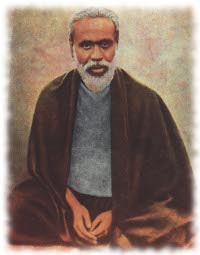
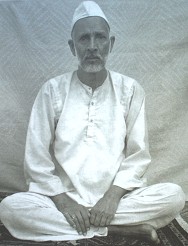
Sahaj Marg Masters


Lalaji (1873 - 1931)

Babuji(1899 - 1983)


Chariji (1927 - current)
Vast amount of literature is available on this Raja yoga based system of practice documenting the history and growth of the organization from its simple beginnings.  These books are valuable resource in helping the practitioner understand the system and monitor progress.   A number of them are available online with free access. My favorite introductory book is “Reality at Dawn”  http://www.sahajmarg.org/publications/ebook/reality-at-dawn

For further reading:


Finally, this is a truly universal practice that can be practiced by anyone from any tradition or religious background without any restrictions. I will leave you with a message from Babuji that beautifully captures the essence of the practice.